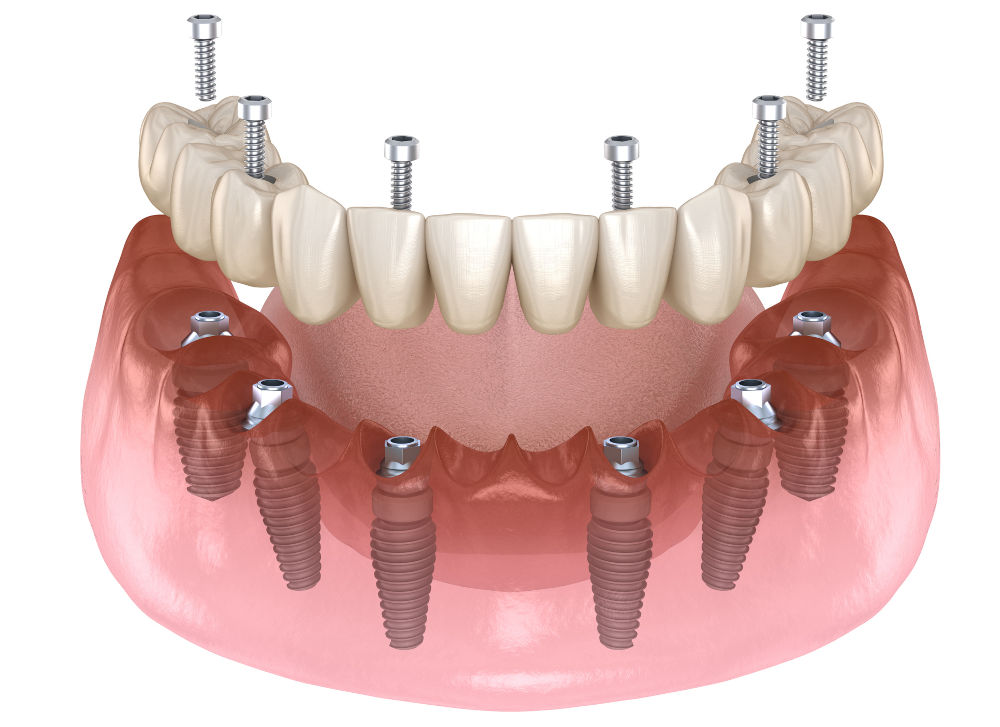

All-on-X Dental Implants in Pickering: Full Arch Teeth in a Day with Digital Planning
For many people in Pickering, the decision to address failing or missing teeth has been delayed for years. Some avoid smiling in photos. Others have stopped eating foods they once enjoyed. Many assume treatment will be painful, take too long, or cost more than they can manage.
The reality in 2026 is very different from what most patients expect. Full-arch dental implant treatment has evolved into a streamlined, digitally guided procedure that can deliver a complete set of fixed teeth in a single appointment. At Pickering Smile Centre, the clinical team led by Dr. Robert Eisen and Dr. Amir Guorgui uses the All-on-X protocol, a refinement of the original All-on-4 concept, to restore full arches using as few as four strategically placed implants. Every case is planned digitally using CBCT imaging, intraoral scanning, and 3D printing before treatment begins.
This article explains exactly how the procedure works, who qualifies, what the recovery process entails, and what sets the approach at Pickering Smile Centre apart from standard implant dentistry.
Key Takeaways
- All-on-X dental implants replace an entire arch of missing or failing teeth using four to six strategically placed implants that support a fixed, non-removable prosthesis.
- Patients at Pickering Smile Centre receive provisional teeth on the same day as surgery, meaning they never leave the clinic without a functional smile.
- The clinic's fully digital workflow (CBCT, iTero intraoral scanner, 3D printed provisionals) reduces treatment time, improves precision, and eliminates guesswork.
- Long-term clinical research published in the Journal of the American Dental Association (JADA) confirms cumulative implant survival rates above 94% at 10 years for the All-on-4 protocol.
- Three treatment tiers (Essential, Core, Premium) allow patients to choose a restoration material that matches their goals and budget, with flexible monthly financing available.
Find our Dental Clinic Near You
What Are All-on-X Full Arch Dental Implants?
All-on-X dental implants are a fixed, full-arch tooth replacement system that uses four to six implants per jaw to support a complete prosthetic bridge. Unlike removable dentures, the prosthesis is permanently secured to the implants and does not shift, click, or require adhesive. The "X" in All-on-X means the number of implants is customized for each patient rather than fixed at exactly four.
The original All-on-4 protocol was developed by Dr. Paulo Maló in collaboration with Nobel Biocare in the late 1990s. The concept was built around a specific surgical insight: by tilting the two posterior implants at an angle (typically 30 to 45 degrees), clinicians could engage more bone in the anterior jaw without requiring bone grafts. This made full-arch restoration accessible to patients who had previously been told they lacked sufficient bone volume for traditional implants.
A longitudinal study published in the Journal of the American Dental Association followed 245 patients who received All-on-4 implants in the mandible for up to 10 years. The cumulative implant survival rate was 94.8%, and the prosthetic survival rate reached 99.2% . These results confirmed the protocol as a reliable, long-term treatment option for completely edentulous patients.
How All-on-X Evolved from the Original All-on-4 Protocol
At Pickering Smile Centre, the clinical team builds on this proven foundation but does not limit every case to exactly four implants. Some benefit from five or six implants per arch, depending on bone density, jaw anatomy, and the specific prosthetic requirements of the case.
Dr. Rob Eisen, the lead clinician for implant cases, explains the approach: "Every patient is different. Some people need four implants. Others benefit from five or six. Rather than forcing everyone into the same formula, we customize every treatment plan based on your anatomy, your bone, and your goals. We are not treating teeth. We are treating people."
The term All-on-X reflects a philosophy of individualized treatment planning rather than a rigid surgical template.
Who Is a Candidate for Full-Mouth Dental Implants?
Full arch implant treatment is designed for patients who are missing most or all of their teeth in one or both jaws, or whose remaining teeth are too compromised to save. The most common candidates include the following groups:
- Patients with multiple failing teeth: cracked, decayed beyond repair, or affected by advanced periodontal disease.
- Current denture wearers who are frustrated with loose, uncomfortable, or poorly fitting removable prosthetics and want a permanent, fixed solution.
- Patients who have been told they need full mouth extractions and are looking for a reconstruction option that avoids traditional dentures entirely.
- People experiencing bone loss in the jaw who assumed they were not candidates for implants. The angled implant placement in the All-on-X protocol often eliminates the need for bone grafting.
Signs That Full Arch Treatment May Be Right for You
During patient consultations, the implant team consistently hears the same concerns from people considering full-arch dental implants. The questions asked most frequently include:
- Do you avoid smiling or hide your teeth in photographs?
- Do you have loose or uncomfortable dentures?
- Have you stopped eating certain foods because chewing is painful or unreliable?
- Do you feel embarrassed about the appearance of your teeth?
- Have you been told that several teeth cannot be saved?
If any of these apply, a consultation with the implant team at Pickering Smile Centre is a logical next step. There is no age limit for dental implant treatment. Patients in their 70s and 80s are routinely treated, provided their overall health allows for a surgical procedure under sedation.
How All-on-X Treatment Works: From Consultation to Final Smile
The patient journey at Pickering Smile Centre follows a clearly defined sequence. Every step is digitally planned before any surgical work begins, which reduces chair time, minimizes unexpected findings during surgery, and allows the patient to preview their new smile before committing to treatment.
Step 1: Comprehensive Consultation and 3D Imaging
The process starts with a detailed clinical examination, a full review of the medical history, and advanced 3D imaging. Two technologies are used at this stage:
- CBCT (Cone Beam Computed Tomography): a 3D X-ray that provides a complete volumetric scan of the jawbone, nerve pathways, sinus cavities, and existing tooth roots. This is essential for determining implant placement positions, angles, and lengths.
- iTero Intraoral Scanner: a digital scanner that captures a precise 3D model of the teeth, gums, and soft tissue inside the mouth. This replaces the need for messy physical impressions.
Together, these scans give the clinical team a complete digital map of the patient's oral anatomy.
Step 2: Digital Treatment Planning and Smile Design
Using the combined CBCT and intraoral scan data, the team plans the exact position, angle, and depth of each implant in software. This is where All-on-X customization happens. The clinician determines whether four, five, or six implants are optimal for the specific jaw.
At this stage, the provisional prosthesis is also designed digitally. Patients can see a rendering of their new smile and provide feedback before any clinical work begins.
Step 3: 3D Printing of the Provisional Prosthesis
Pickering Smile Centre manufactures provisional prosthetics in-house using a 3D printer. This is a significant advantage over clinics that outsource laboratory work, because it means:
- The provisional is ready before surgery day, not fabricated under time pressure during the procedure.
- Design adjustments can be made quickly without waiting for an external lab.
- Overall treatment costs are lower because the in-house digital workflow eliminates multiple lab fees.
Step 4: Surgery and Same Day Teeth
On the day of surgery, any remaining failing teeth are extracted, and the implants are placed according to the digital plan. Patients receive IV sedation throughout the procedure, ensuring comfort and eliminating anxiety.
Once the implants are placed and confirmed stable, the prefabricated provisional prosthesis is attached to the implants on the same day. The patient leaves the clinic with a full set of functional, natural-looking teeth. This is what gives the treatment its common name: Teeth in a Day.
Step 5: Healing Period
Over the following three to six months, the implants undergo a biological process called osseointegration, during which the titanium implant posts fuse permanently with the surrounding jawbone. During this period, the patient wears the provisional prosthesis and can eat, speak, and smile normally.
The clinical team monitors healing through follow-up appointments and adjusts the provisional if needed.
Step 6: Final Restoration
Once osseointegration is complete, the provisional prosthesis is replaced with the final, permanent restoration. The material used depends on the treatment tier the patient selected (PMMA, titanium-reinforced, or full zirconia). The final prosthesis is precision-fitted using digital impressions and represents the definitive, long-term result.
The Digital Workflow: Why Technology Changes Everything
One of the defining features of All-on-X treatment at Pickering Smile Centre is the fully digital workflow. Every stage of planning, design, and fabrication is handled digitally, which fundamentally changes the patient experience compared to traditional implant dentistry.
CBCT Imaging vs. Traditional X-Rays
A standard dental X-ray provides a flat, two-dimensional image. A CBCT scan provides a full three-dimensional view of the jaw, showing bone density, bone volume, nerve canal positions, and sinus proximity in detail that is not visible on conventional radiographs. This level of imaging allows the clinician to plan implant positions with sub-millimetre accuracy before entering the operating room.
Intraoral Scanning vs. Physical Impressions
Traditional dental impressions involve biting into a putty-based material, which is uncomfortable for many patients and introduces dimensional inaccuracies as it sets. The iTero intraoral scanner captures thousands of data points per second using a small handheld wand, creating a precise digital model in minutes. The result is a more accurate fit for the prosthesis and a more comfortable experience for the patient.
In-House 3D Printing
The ability to 3D print provisional prosthetics in-house is a practical advantage that affects both quality and cost. Instead of sending a case to an external dental laboratory and waiting days for a return, the Pickering Smile Centre team can design, print, and verify a provisional on-site. This shortens the overall treatment timeline and gives the clinician direct control over the provisional's fit and aesthetics.
Dr. Rob Eisen, DDS, Pickering Smile Centre, has spoken publicly about the impact of this technology on patient outcomes: "Technology has completely transformed the way we provide this treatment. Using digital scans, CBCT imaging, computer-guided planning, and our in-house 3D printers, we can plan your smile before we begin treatment. That means more precision, more efficiency, shorter appointments, better communication, and often lower overall costs."
Same Day Dental Implants: How Teeth in a Day Actually Works
The phrase "Teeth in a Day" is not marketing language. It describes a clinical reality: a patient can arrive at the clinic with failing or missing teeth and leave that same day with a full arch of fixed, provisional teeth attached to newly placed implants.
This is possible because of two factors working together. First, the angled posterior implants in the All-on-X protocol achieve strong primary stability in the bone immediately after placement. This means the implants are mechanically secure enough to support a prosthesis right away, without waiting months for osseointegration. Second, the provisional prosthesis is pre-fabricated using the digital workflow described above, so there is no delay for laboratory work on surgery day.
It is important to understand the distinction between the provisional and the final restoration. The provisional prosthesis placed on the day of surgery is functional and aesthetic, but it is made of interim materials (typically PMMA acrylic). It is designed to be worn during the healing period. After three to six months, once the implants have fully integrated with the bone, the provisional is replaced with the permanent, definitive restoration made from more durable materials.
The patient is never without teeth at any point in the process.
All-on-X vs. Dentures vs. Implant-Supported Dentures: Understanding Your Options
Patients considering full-arch tooth replacement typically face three main options. Understanding the differences is essential for making an informed decision.
Traditional Removable Dentures
Removable dentures are prosthetic teeth set in an acrylic base that sits on the gums. They are the most affordable option, but they come with well-documented limitations. Dentures can slip during eating and speaking; they require adhesive to stay in place, and they do not stimulate the jawbone, which means bone loss continues after tooth extraction. Over time, the jaw changes shape, and the denture fit deteriorates, requiring periodic relining or replacement.
Implant-Supported Dentures (Snap-On or Overdentures)
Implant-supported dentures use two to four implants to anchor a removable denture. The denture "snaps" onto attachments on the implants, providing significantly better retention than a conventional denture. However, the prosthesis is still removable. The patient takes it out for cleaning, and while it is more stable than a traditional denture, it does not provide the same fixed, permanent feel as a full-arch implant bridge.
All-on-X Fixed Implant Bridge
The All-on-X approach produces a prosthesis that is permanently fixed to the implants. It does not come out. It does not require adhesive. It feels, functions, and looks like natural teeth. The implants also preserve jawbone volume by providing the mechanical stimulation that prevents bone resorption.
For patients seeking the closest possible experience to natural teeth, a fixed implant bridge is the most advanced option available. The tradeoff is a higher upfront cost compared to dentures, although many patients find the long-term value (durability, comfort, no ongoing adhesive/reline costs) makes it the more practical choice over time.
A 2022 study published in the Journal of Clinical Medicine evaluated All-on-4 outcomes at the 10-year mark and confirmed implant survival exceeding 94% even in cases where implants were placed with bone dehiscence or fenestrations, conditions that would have required grafting under traditional protocols.
Treatment Options at Pickering Smile Centre
Pickering Smile Centre offers three tiers of All-on-X treatment. Every tier includes the same level of clinical planning, surgical care, and digital workflow. The differences are in the restorative materials used for the final prosthesis.
Essential: PMMA Hybrid Restoration
The Essential tier is designed for patients who want a functional, natural-looking result at the most accessible price point. The final restoration is a PMMA (polymethyl methacrylate) hybrid prosthesis. PMMA is a proven dental material that provides good aesthetics and function. It is lighter than metal-based alternatives and well-suited for patients with straightforward cases.
This tier includes digital planning, a comprehensive clinical exam, CBCT imaging, and an in-house 3D-printed provisional.
Core: Titanium Reinforced Restoration
The Core tier is the most popular option at the clinic. It includes everything in the Essential tier, plus a titanium-reinforced final restoration. The titanium framework provides significantly greater structural strength and long-term durability compared to a pure PMMA prosthesis. It also allows for a more precise fit, which contributes to better implant health over time.
The Core tier also includes a digital try-in stage, where the patient can evaluate the appearance and fit of the restoration before final fabrication.
Premium: Full Zirconia Restoration
The Premium tier represents the highest level of aesthetics and durability available in full-arch implant dentistry. Zirconia is a ceramic material that is exceptionally strong, highly resistant to staining and chipping, and produces the most natural-looking results. A full zirconia restoration is the closest material match to natural tooth enamel in terms of light transmission and surface texture.
For patients who prioritize maximum longevity and the best possible aesthetic outcome, the Premium tier is the recommended choice.
Pickering Smile Centre offers flexible financing for all three tiers, with monthly payment options available on approved credit. The team provides a full cost breakdown during the consultation, so there are no surprises.
What to Expect After All-on-X Surgery: Recovery and Aftercare
Understanding the recovery timeline helps patients plan accordingly and set realistic expectations.
The First 24 to 48 Hours
Mild to moderate swelling and discomfort are normal in the first two days after surgery. Pain is managed with prescribed medication and typically subsides significantly by day three. Patients are advised to rest, apply cold compresses to the outside of the jaw, and avoid strenuous physical activity.
The First Two Weeks
During this period, patients follow a soft food diet. Foods like yogurt, scrambled eggs, mashed potatoes, smoothies, soups, and soft pasta are all suitable. Hard, crunchy, or sticky foods should be avoided to protect the healing implants and provisional prosthesis.
Most patients return to work within three to five days, depending on the nature of their job. Desk work is usually manageable within a few days; physically demanding work may require a longer break.
Weeks Two Through Six
As healing progresses, patients gradually reintroduce firmer foods into their diet. The provisional prosthesis remains fully functional during this phase, and patients can eat, speak, and smile with confidence. Follow-up appointments with the clinical team ensure that healing is progressing normally.
Three to Six Months: Final Restoration
Once the implants have fully integrated with the jawbone (osseointegration), the provisional is removed and replaced with the permanent restoration. This appointment involves final digital impressions, shade matching, and precise fitting of the definitive prosthesis.
Long-Term Care
All-on-X restorations require consistent home care and regular professional maintenance. Patients should brush twice daily using a soft-bristled brush, clean under the prosthesis with a water flosser or interdental aids, and attend professional cleaning and check-up appointments at least twice per year. With proper maintenance, full-arch implant restorations can last 15 to 20 years or longer, depending on the material used.
Why Choose Pickering Smile Centre for Full Arch Implants?
Several factors distinguish Pickering Smile Centre from other dental clinics offering implant services in Pickering.
Experienced surgical team. The clinic's implant cases are led by a team of dentists, including Dr. Amir Guorgui, Dr. Robert Eisen, Dr. James C.H. Ko, Dr. Soumya Abraham, and Dr. Christian Samuel. The practice has more than 35 years of combined experience in implant dentistry, cosmetic procedures , and restorative care.
Everything under one roof. From the initial CBCT scan and digital treatment plan to the surgical placement of implants and fabrication of the provisional prosthesis, every stage of treatment happens at the Pickering clinic. Patients do not need to be referred to external specialists or wait for off-site laboratory work.
IV sedation available. For patients who experience dental anxiety or who prefer to be fully relaxed during the surgical procedure, the clinic offers IV sedation dentistry . This allows the patient to remain comfortable and unaware of the procedure while the clinical team works.
Multilingual staff. The team at Pickering Smile Centre speaks 12 languages, making the clinic accessible to Pickering's diverse community.
Acceptance of the Canadian Dental Care Plan (CDCP). Pickering Smile Centre is a registered provider under the Canadian Dental Care Plan , which may help offset some of the costs of dental implant treatment for eligible patients.
Flexible financing. Monthly payment plans are available on approved credit, making treatment accessible to patients who may not be able to pay the full cost upfront.
Financing Full Mouth Dental Implants
Cost is one of the most common barriers to full-arch implant treatment, and Pickering Smile Centre addresses this directly with transparent pricing and flexible payment structures.
During the initial consultation, the treatment coordinator provides a detailed cost estimate that includes every component of care: imaging, surgical fees, implant hardware, provisional prosthesis, follow-up visits, and the final restoration. There are no hidden fees or unexpected charges after treatment begins.
For patients who require flexible payment options, the clinic offers monthly payment plans through approved financing partners, including Beautifi. Many patients are surprised to learn that full-arch implant treatment can be structured into manageable monthly payments rather than a single lump sum.
Insurance coverage varies by provider and plan. The treatment coordination team at Pickering Smile Centre will review the patient's insurance benefits and advise on which components of treatment may be covered.
All-on-X Before and After: What Changes for Patients
The transformation that full-arch implant patients experience extends far beyond the physical appearance of their teeth. The clinical team at Pickering Smile Centre consistently reports that the most common reaction from patients after treatment is regret about waiting so long. The changes are both functional and deeply personal.
From a clinical perspective, the outcomes include:
- Elimination of infection and decay. Hopeless teeth are removed during the procedure, and chronic oral infections are resolved.
- Restoration of a balanced bite. The new prosthesis is designed to distribute biting forces evenly, which protects the implants and supporting bone.
- Preservation of jawbone. Unlike dentures, implants stimulate the bone and prevent the progressive bone loss that occurs after tooth extraction.
- Improved facial aesthetics. Bone loss and missing teeth often lead to a sunken, aged facial appearance. Full-arch implants restore the structural support of the lower face, resulting in a more youthful look.
- Full dietary freedom. Patients can eat steak, apples, corn on the cob, and other foods that are impossible or uncomfortable with dentures.
Every case begins with a free consultation. There is no obligation to proceed, and the appointment gives patients the opportunity to ask questions, understand their options, and see what results are realistically achievable for their specific situation.
Full Arch Dental Implants Offer a Permanent Solution for Missing and Failing Teeth
For patients in Pickering living with missing teeth, failing dental work, or uncomfortable dentures, full-arch implant treatment represents the most complete and lasting solution available today. The All-on-X protocol combines decades of peer-reviewed clinical evidence with modern digital technology to deliver fixed, natural-looking teeth in a single surgical appointment.
What makes this treatment different from the options available even five years ago is the convergence of three factors: digitally guided implant placement using CBCT and intraoral scanning, in-house 3D printing of provisional prosthetics, and a customized approach that adapts the number and position of implants to each patient's anatomy rather than following a rigid formula. The result is a treatment that is faster, more predictable, and more accessible than traditional full-mouth implant reconstruction.
The clinical evidence supports this. Long-term studies published in the Journal of the American Dental Association and the Journal of Clinical Medicine consistently report implant survival rates exceeding 94% at 10 years. At Pickering Smile Centre, that evidence base is paired with a team of experienced dentists, IV sedation for patient comfort, flexible financing options, and a commitment to completing every stage of treatment under one roof.
The first step is always the same: a free consultation with no obligation. The appointment includes a CBCT scan, a clinical evaluation, a clear treatment plan, and a transparent cost estimate. Patients leave knowing exactly what is possible for their situation and what it will take to get there.
Frequently Asked Questions
Does All-on-X surgery hurt?
The procedure is performed under IV sedation, so patients do not feel pain during surgery. Post-operative discomfort is managed with prescribed medication and typically resolves within a few days. Most patients report that the experience was significantly more comfortable than they expected.
Am I too old for dental implants?
There is no upper age limit for dental implant treatment. Patients in their 70s and 80s are regularly treated at Pickering Smile Centre. The determining factors are overall health, bone quality, and the ability to undergo a minor surgical procedure. A CBCT scan during the consultation will confirm whether implant placement is feasible.
How long do All-on-X implants last?
The implants themselves are designed to last a lifetime with proper care. The prosthetic restoration (the teeth portion) typically lasts 15 to 20 years or longer, depending on the material. Zirconia restorations offer the longest expected lifespan. Regular professional cleanings and good home care are essential for maximizing longevity.
What if I have significant bone loss?
The angled placement of posterior implants in the All-on-X protocol is specifically designed to work with reduced bone volume. Many patients who have been told they are "not candidates" for traditional implants are still candidates for All-on-X. The CBCT scan taken during the consultation provides a definitive answer.
Can I have both upper and lower arches done at the same time?
Yes. Many patients opt to treat both arches in a single surgical session. The treatment plan is customized for each arch based on the specific bone and anatomy present. Treating both arches together reduces the total number of surgical appointments and recovery periods.
What foods can I eat after surgery?
During the first two weeks, a soft food diet is recommended: soups, smoothies, scrambled eggs, yogurt, soft pasta, and similar items. After the initial healing phase, patients gradually return to a full diet. Once the final restoration is placed, there are virtually no dietary restrictions.
What is the difference between dentures and All-on-X implants?
Dentures are removable prosthetics that sit on the gums and require adhesive. They can slip, restrict diet, and contribute to ongoing bone loss. All-on-X implants support a fixed prosthesis that is permanently attached to the jaw. The prosthesis does not move, does not require adhesive, and preserves jawbone health by providing functional stimulation.
How do I care for my All-on-X restoration?
Daily care involves brushing with a soft-bristled toothbrush, cleaning under the prosthesis with a water flosser or interdental brush, and attending professional cleanings at least twice per year. Your dental team at Pickering Smile Centre will provide specific care instructions tailored to your restoration type.